Feminist Platform for Peace and Justice

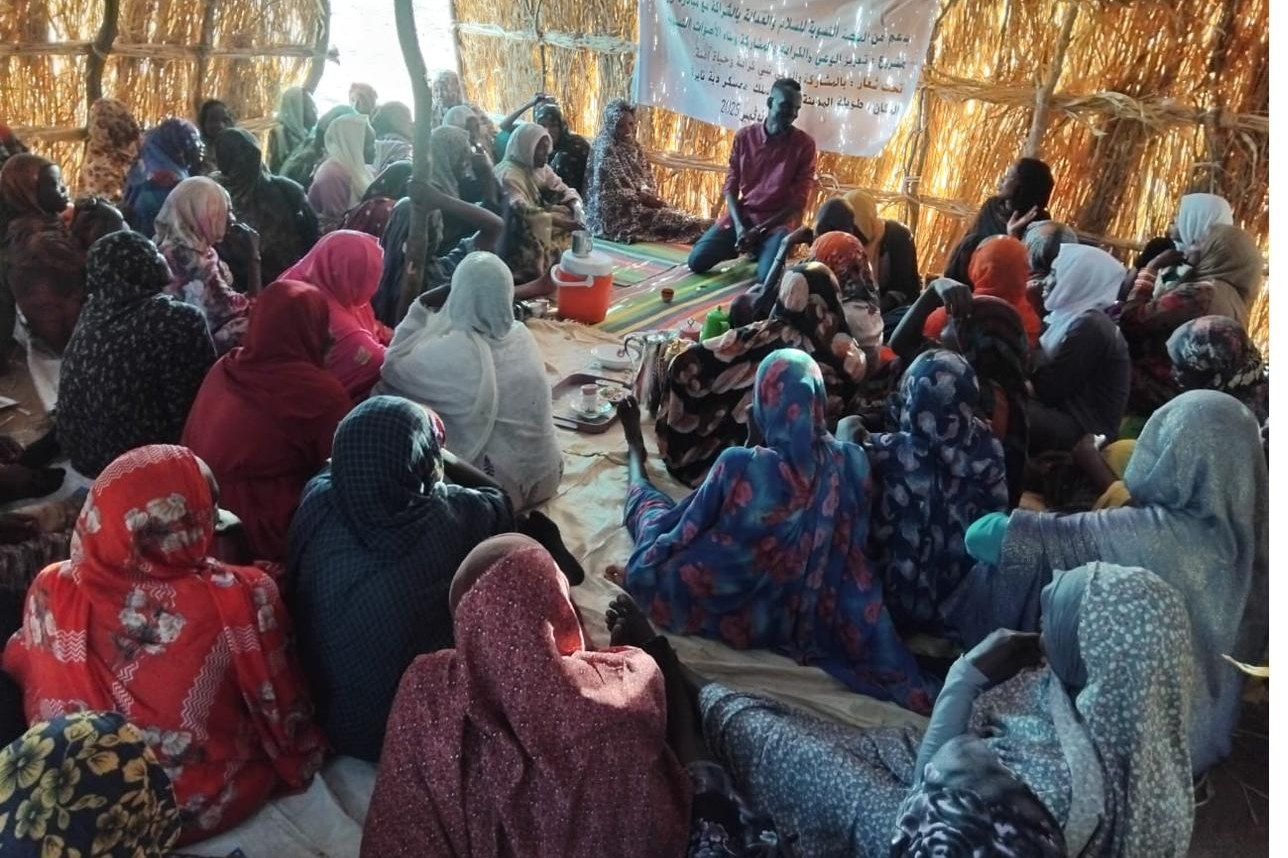
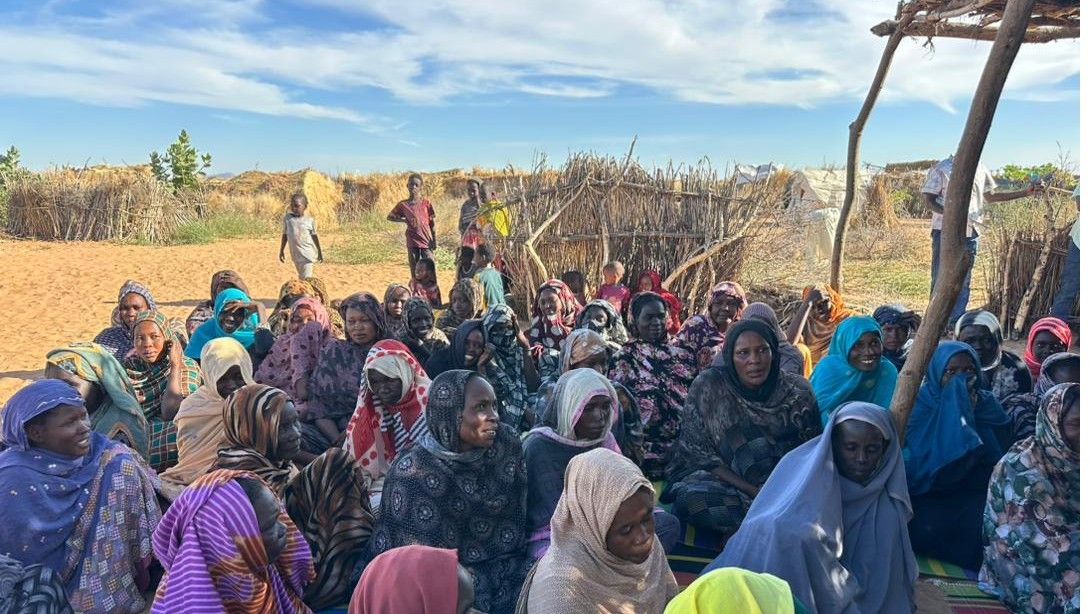
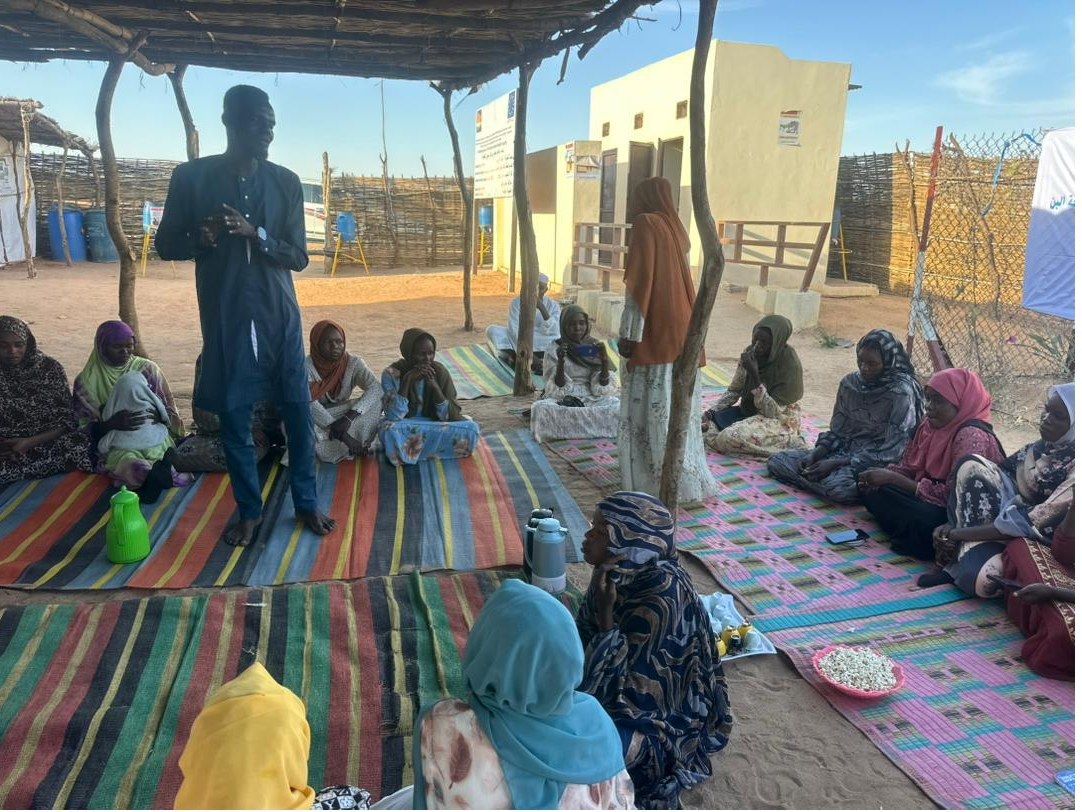
Women seated together on woven mats under an open sky at a camp gathering

The war started in April. We started in June.

Since 2023, we have worked alongside Sudanese women in displacement camps and refugee settlements, from Kassala to Kiryandongo. Discussion circles on borrowed mats. Legal advice. Crayons for children who have drawn the same flag a hundred times. Winter clothes before the cold arrives.

Who We Are

We are a feminist organization working with Sudanese women and girls displaced by the war that began on 15 April 2023. We started in June of that year, two months in, when it was already clear this would not be short.

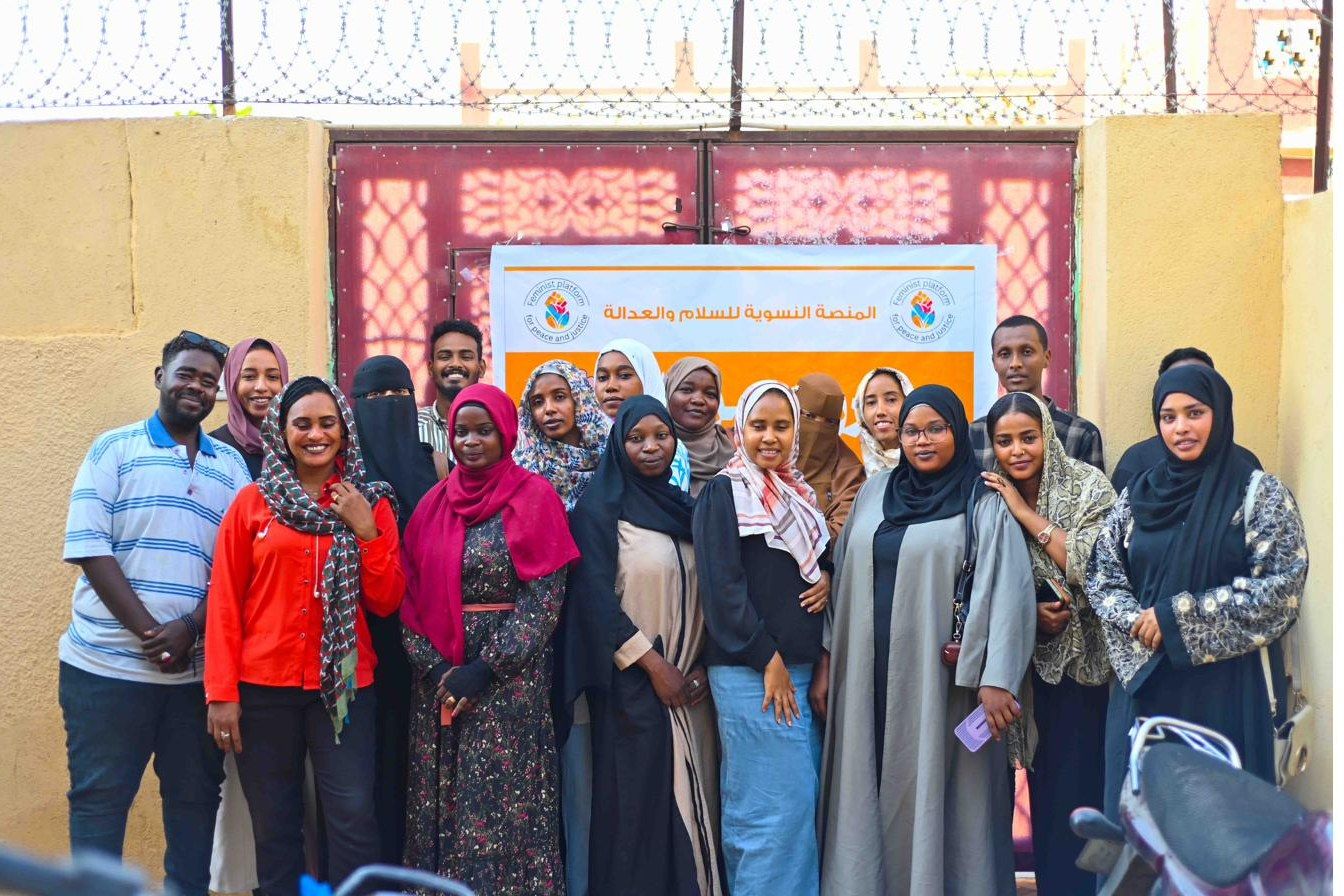
The team standing together in front of the organization's banner outside a community building
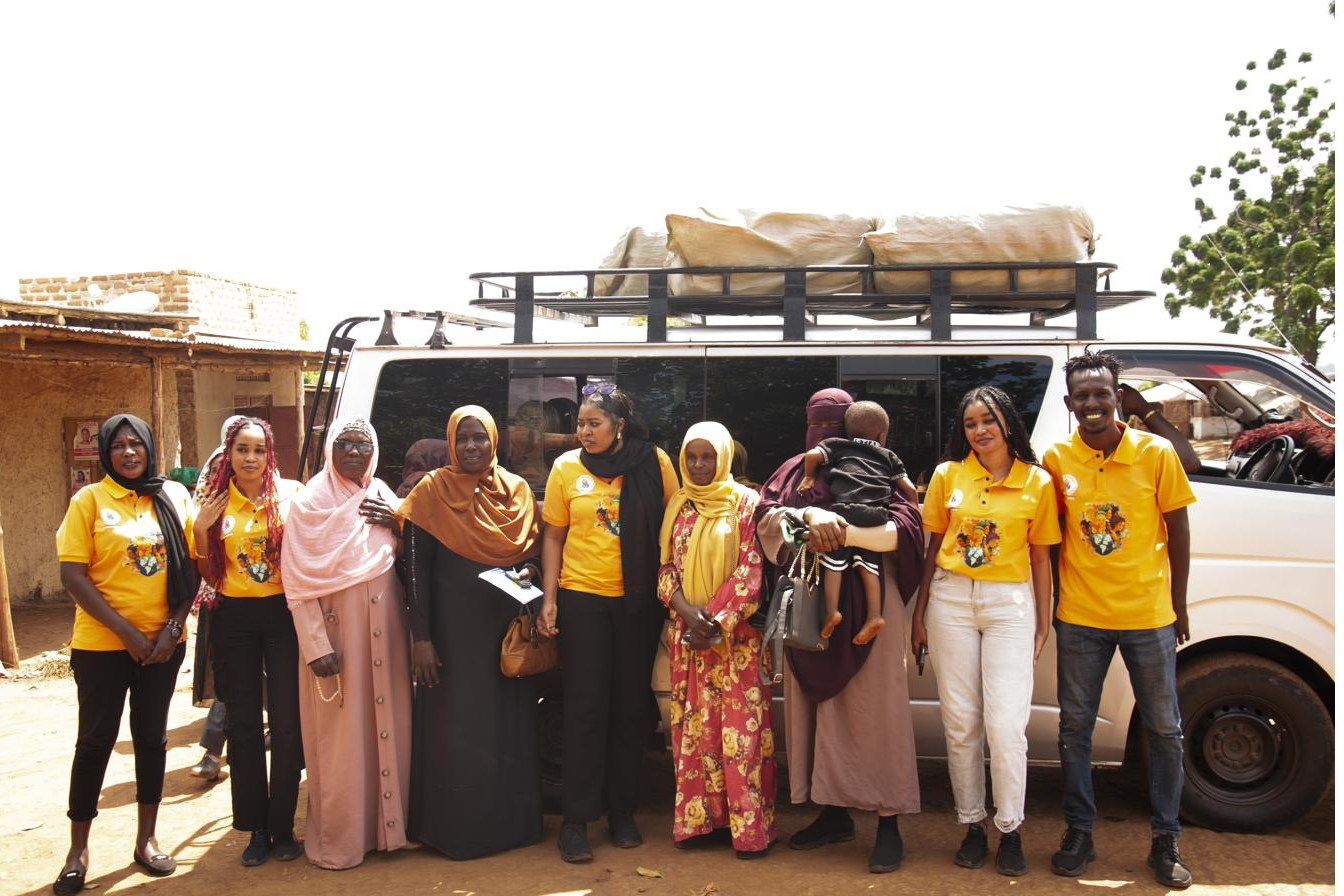
The team standing beside a loaded vehicle before a distribution

The work runs on both sides of a border. Inside Sudan, in camps and host communities where families arrived carrying what they could and stayed far longer than they planned. In Uganda, in the settlements where Sudanese families are still arriving. We are registered as a non profit in Uganda, and we work in Arabic, in rooms and courtyards and under straw shade.

We do not arrive with a plan and ask women to fit inside it. A discussion circle works when the women in it set the agenda. A legal session helps when someone had the question first. Everything on this site started that way, in a conversation someone else began.

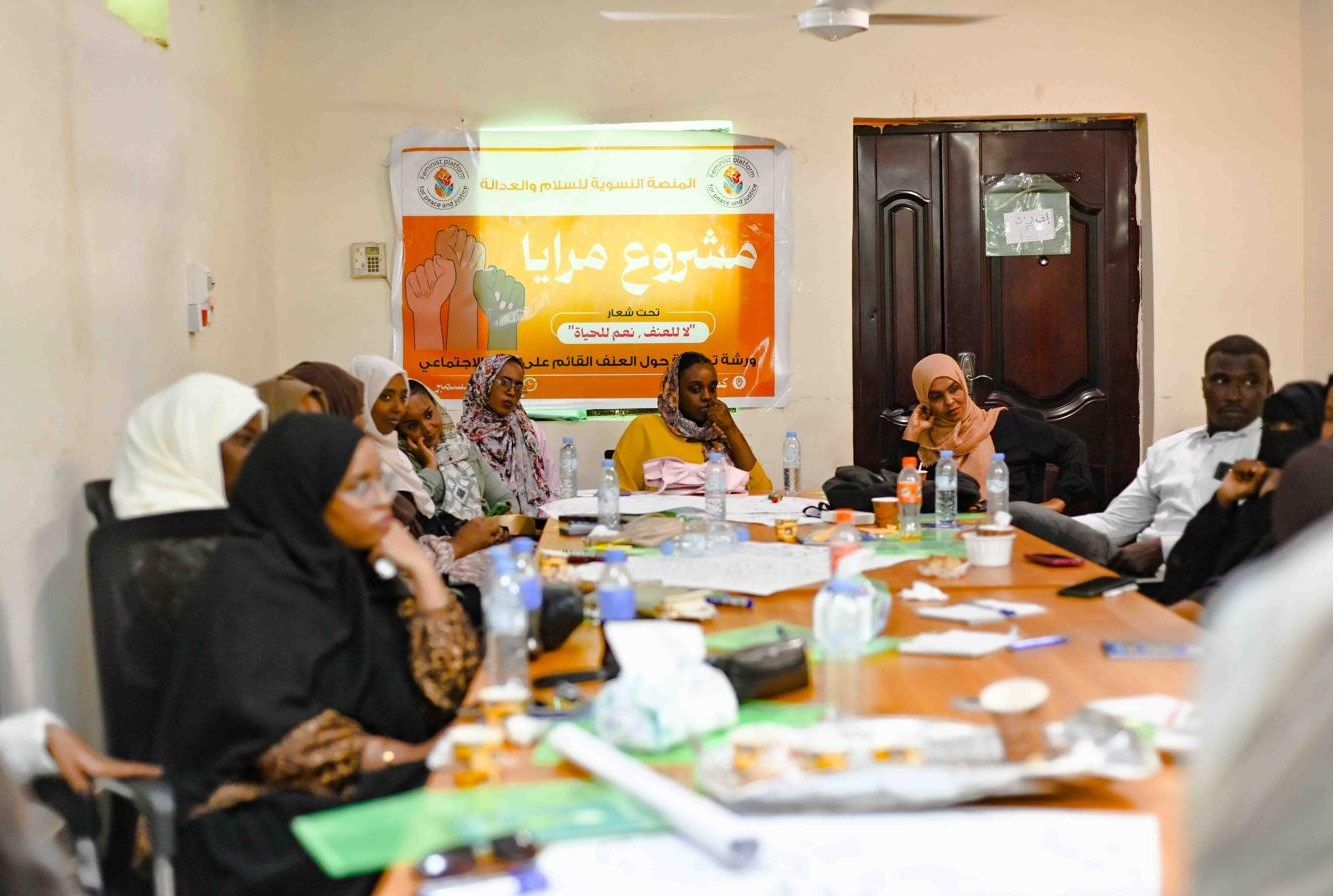
Participants seated around a long table during a workshop session

Our Vision

A Sudan where the women who held their communities together through the war sit in the rooms where its future is decided. Not consulted afterward. Deciding.

Peace that is not signed above people's heads, and a public life women enter as equals rather than as a category someone remembered to include.

Our Mission

We work with women and girls displaced by this war, in the camps and settlements where they are living now, not where a plan says they should be. We organize the circles and let the women in them set the agenda. We bring legal advice and psychosocial support to places that have neither.

Where a woman needs a sanitary pad, a lawyer, or a room she is allowed to speak in, we try to be the ones who show up.

What We Do

Four kinds of work. They overlap constantly: a legal question surfaces in a discussion circle, a child says something in an art session that needs a specialist in the room. We list them separately because that is how they are funded, not because that is how they happen.

A facilitator standing to address women seated on mats under a shaded shelter

Peacebuilding and Dialogue

Negotiations happen in capitals. The women who buried the dead, fed the households, and held neighborhoods together through this war are not in those rooms. Our work is to build both the argument and the constituency that put them there.

  • Women's discussion circles in displacement camps, where the agenda comes from the women sitting in the circle
  • Feminist seminars, in person and online, connecting women across Sudan and the diaspora
  • Mobile cinema: a screen, a generator, and a film worth arguing about, in places with no cinema for a hundred miles
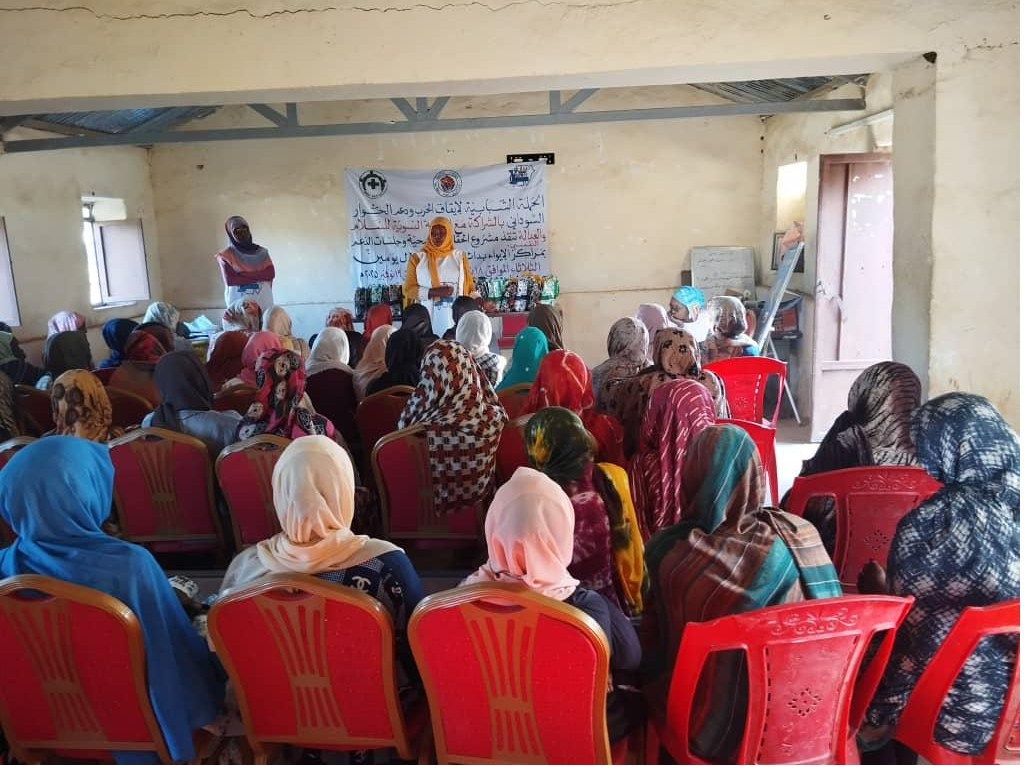
Women seated in rows facing a speaker at an indoor seminar

Protection and Response to Violence

Displacement multiplies every risk a woman already carried and removes everyone she would have turned to. Camps are crowded, badly lit, and far from any court. We work on both halves of that: what a woman can do, and what she is owed.

  • Mirrors, a workshop series on gender-based violence in conflict
  • Digital safety training in Kassala: accounts, phones, and what to do when a phone is taken
  • Legal awareness on marriage, custody, documentation, and which rights survive displacement
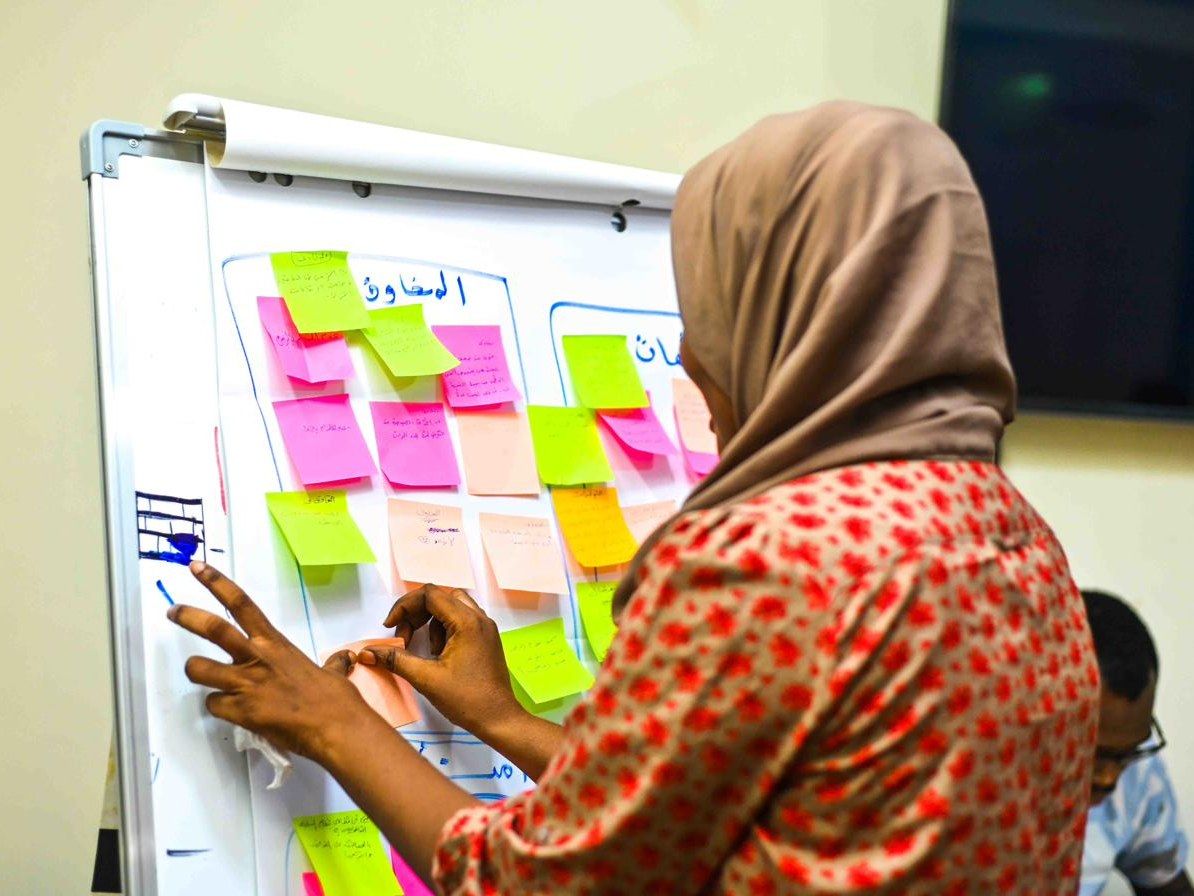
A participant arranging coloured notes across a workshop board
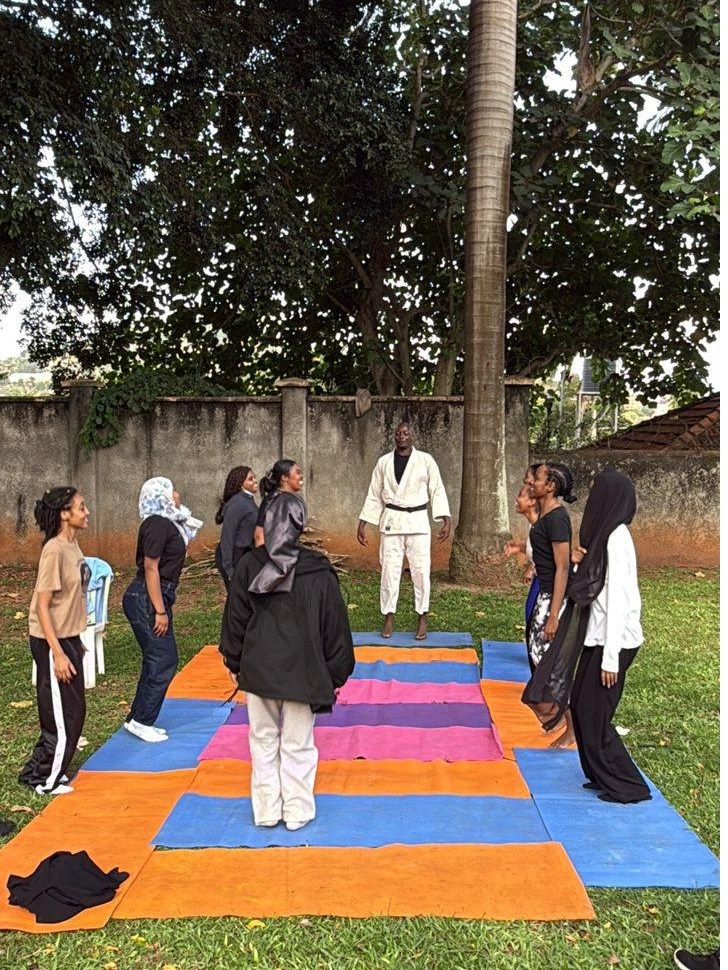
Participants practising movement drills on mats laid out on grass

Psychosocial Support and Healing through Art

Grief does not wait for a clinic to open. Some of what people need is time with someone trained. Some of it is a room, an instrument, a box of crayons, and permission to use them.

  • Drawing and coloring sessions with children
  • Group and individual support sessions with trained specialists
  • On Her Shelves, a reading club for women in Kampala
  • Music evenings
  • Self-defense and movement classes
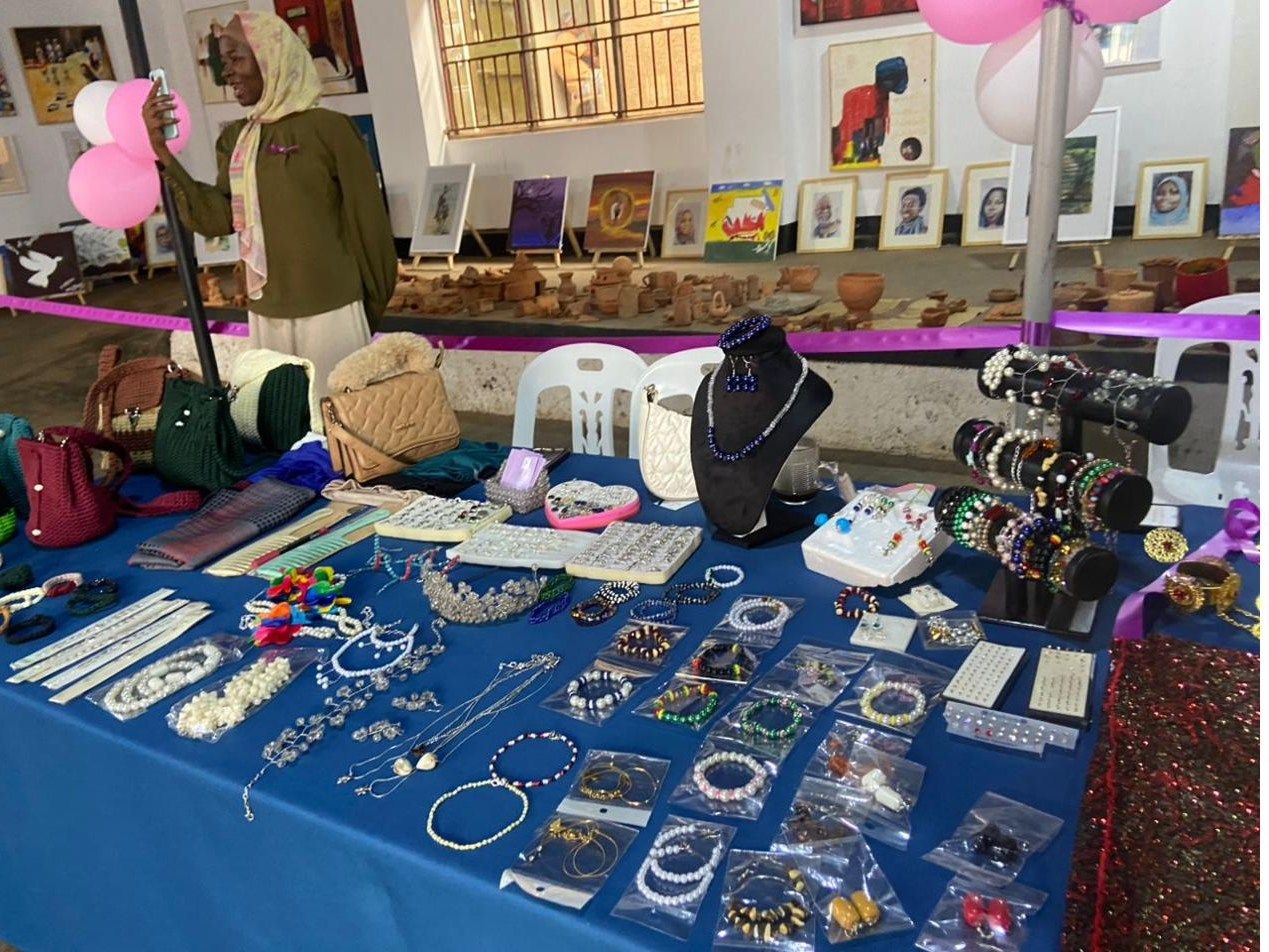
  • An annual art exhibition with partner organizations, showing work by children from the camps. What it raises pays for the next round.
Handmade jewellery and craft work laid out on a table at an exhibition
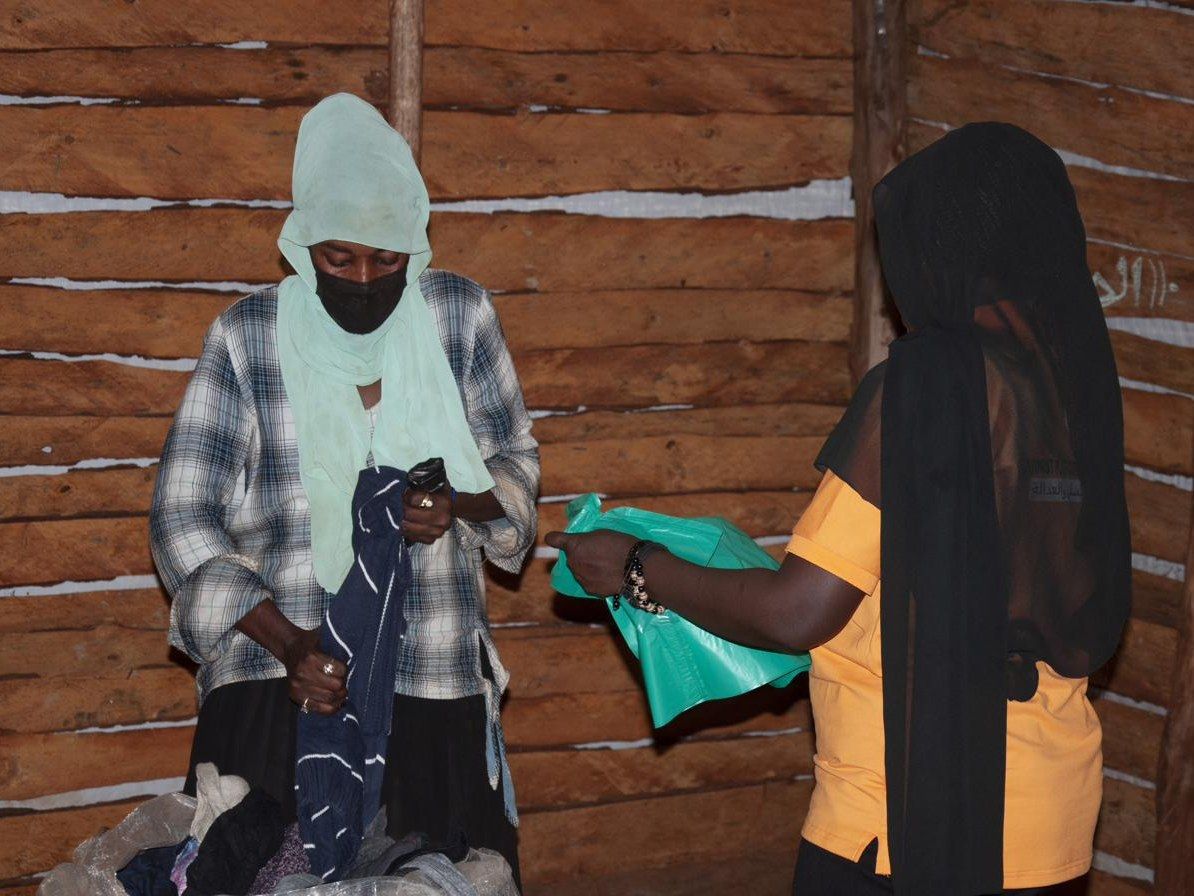
Two women sorting clothing during a distribution inside a timber shelter
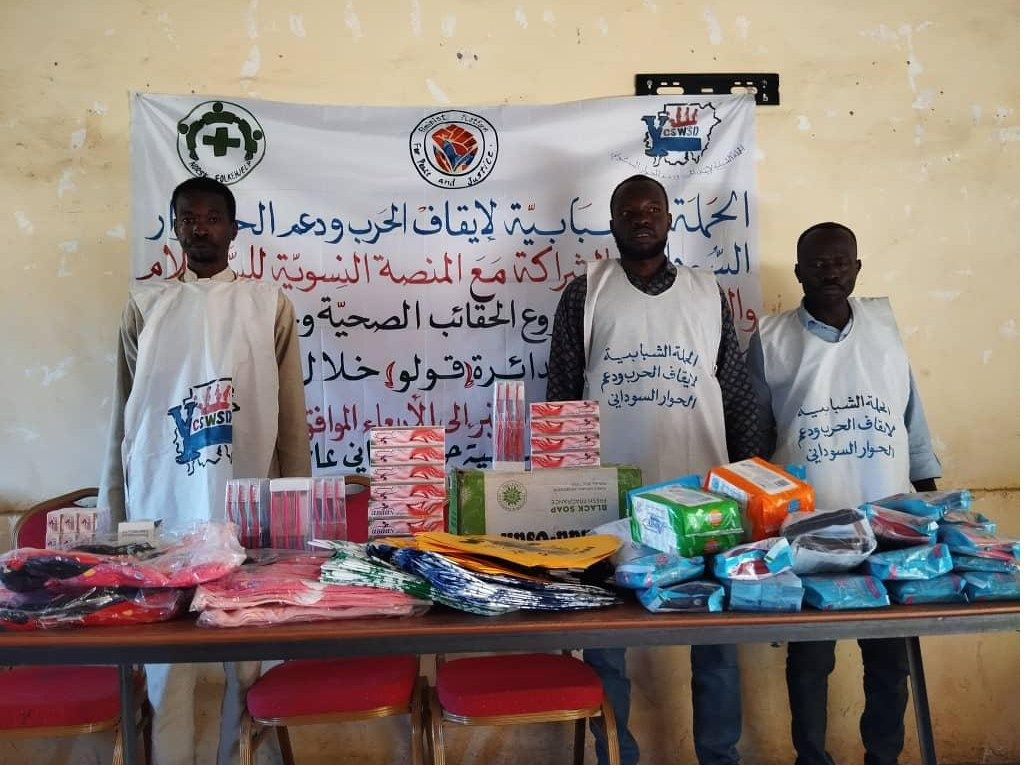
Volunteers standing behind a table of hygiene and clothing supplies prepared for distribution

Health and Dignity

A period does not pause for a war. Neither does a cold night in a shelter with no door.

  • Sanitary pad distribution in camps and settlements
  • Health education on hygiene, reproductive health, and public health basics
  • Pink October, breast cancer awareness sessions
  • Winter clothing and hygiene kits, distributed before the cold arrives rather than after

What We Stand On

Feminism
Gender justice is the frame, not a component. If a plan does not change what a woman can do, it is not our plan.
Peace
No settlement holds when half the country was not asked.
Justice
Discrimination and impunity are the two habits this war fed most. We work against both.
Leadership
Women lead this organization and the work inside it. Not as beneficiaries who were promoted. As the people who started it.
Solidarity
We work with other feminist organizations rather than around them. Nobody here is competing for the same women.
Transparency
We say what we did, what it cost, and what did not work. Trust is built by open information and shared decisions, or it is not built.
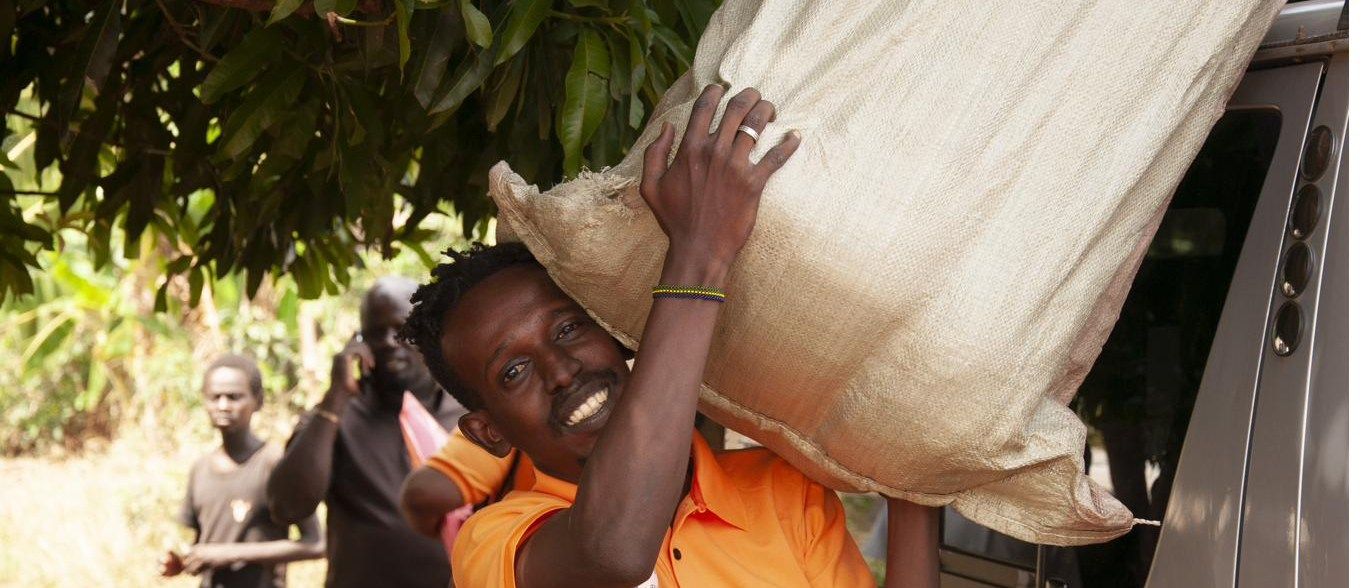
A staff member carrying a sack of supplies on one shoulder

Where We Work

Sudan

Kassala. Abu Hujar in Sennar. Displacement camps including Dabbat Naira, where families arrived with what they could carry and have stayed far longer than anyone planned.

Uganda

Kampala, where the organization is registered. Bweyale and Kiryandongo, the settlements where Sudanese families are still arriving.

A large gathering of women seated on mats beneath a straw shelter
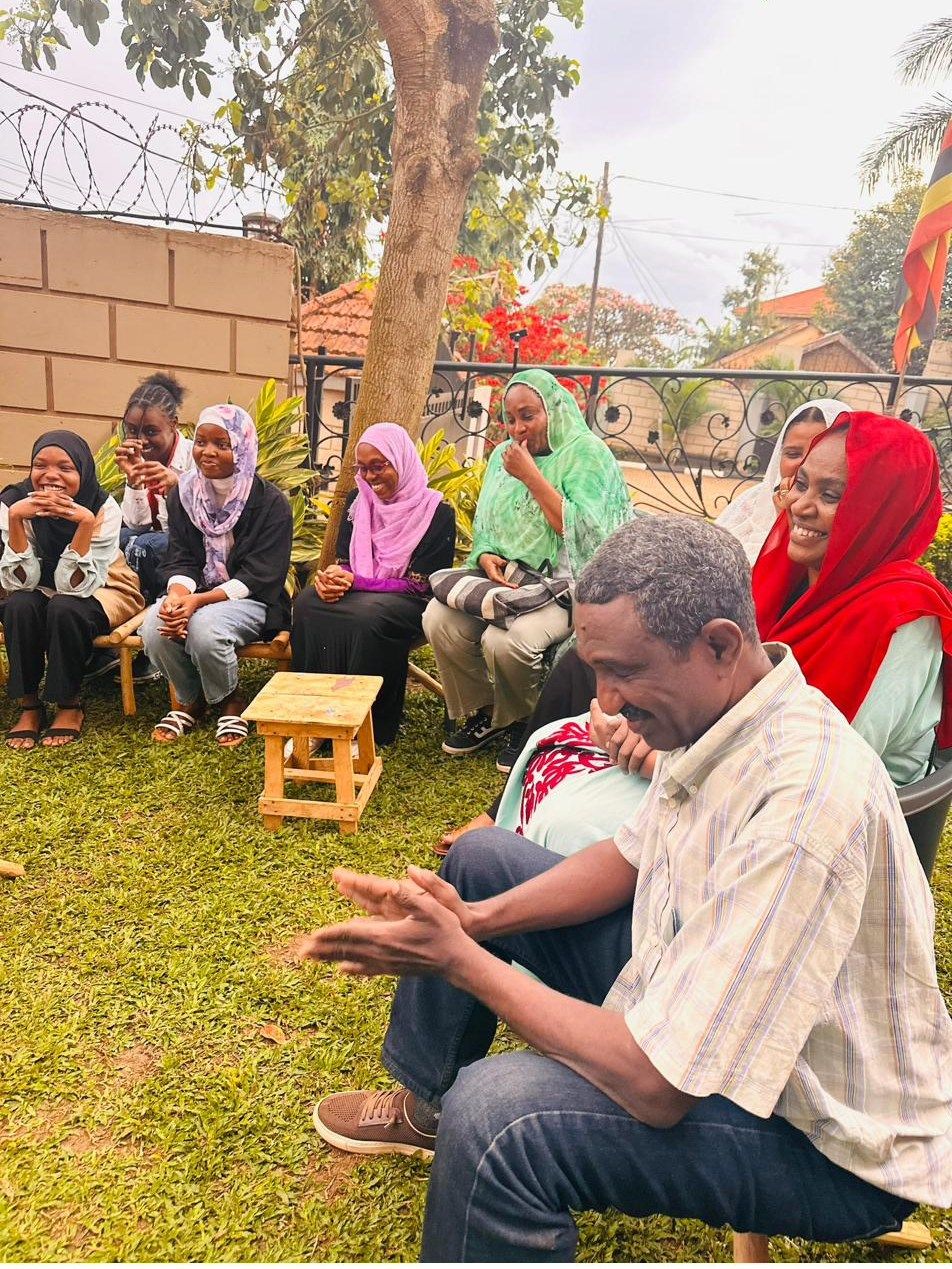
A community session held outdoors under a tree, with participants seated in a circle

Two countries, one displacement. A woman in Kiryandongo and a woman in Dabbat Naira left the same war, and often the same street.

Who We Work With

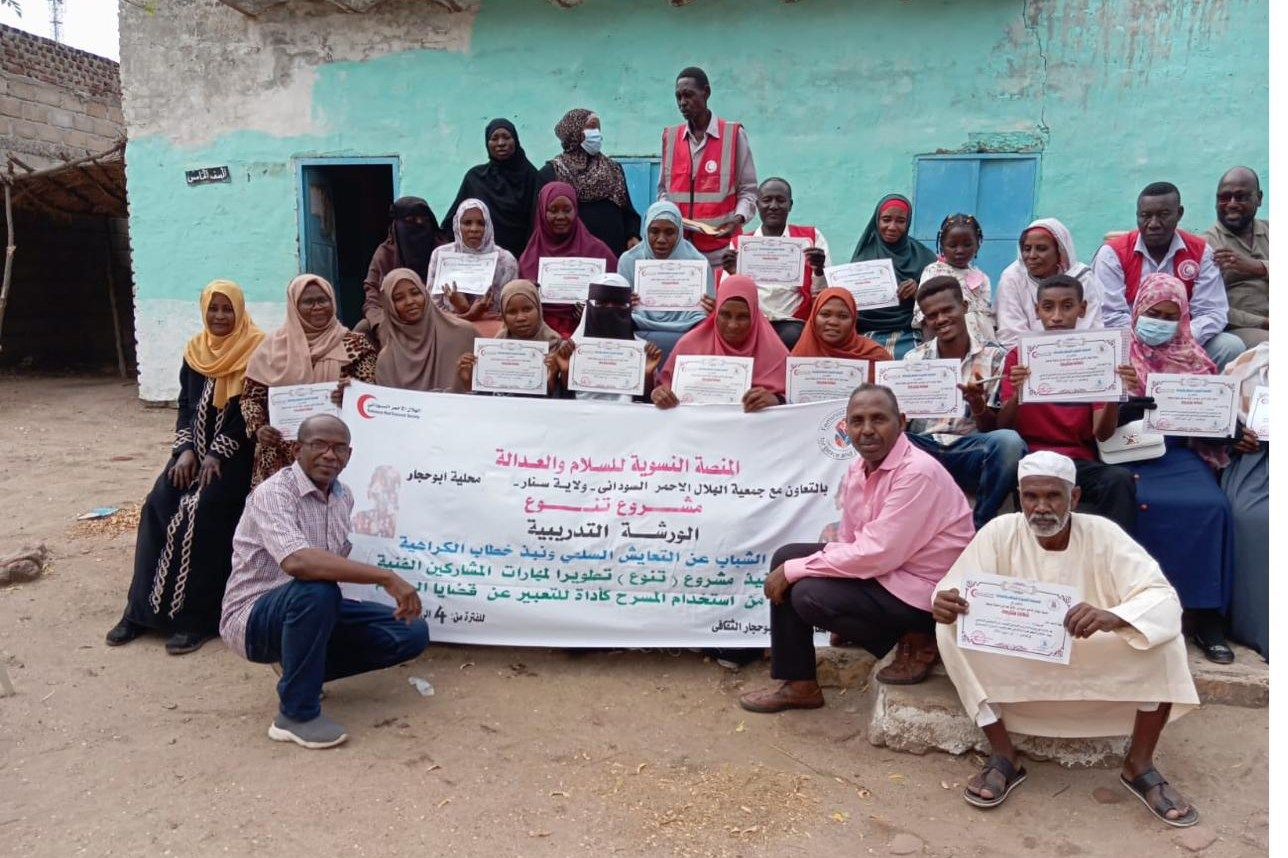
The Sudanese Red Crescent Society in Sennar, on joint distributions and health sessions. Feminist and community organizations across Sudan and the region. Psychosocial support centers. Regional coalitions working on gender-responsive humanitarian action.

We work inside settlements and camps administered by UNHCR and its partners.

Our annual art exhibition is built with partner organizations, showing work by children from the camps.

Participants holding certificates at the close of a joint training with partner staff

Get in Touch

Office
Bukoto Street, Block 75, Kampala, Uganda

For partnerships, funding, or press: write to the email above. For anything urgent from inside a camp, the phone number is faster.